
Garden design · Ideas, materials & practical advice
7 Ways to Transform a Small London Garden
Clever landscaping ideas to make a compact outdoor space feel beautiful, practical and inviting.
2 min readby Paolo Gagnier
The best ways to transform a small London garden are to give the space a clear purpose, choose paving that suits its proportions, add layered planting and use vertical features rather than filling every corner. Even a compact garden can accommodate seating, greenery and year-round interest.
- Know what it’s forOne clear purpose, one focal point.
- A patio that fitsRoom for furniture, not paving everywhere.
- Planting in the layoutRaised beds frame and soften.
- Grow up the wallsTrellis and climbers use vertical space.
- Softness underfootA small lawn or planted beds.
- Light and a clear routeSafer steps, a path that leads the eye.
- A simple paletteA few finishes, repeated.
1. Start with how you want to use the space
Before choosing materials, decide what matters most: a peaceful place to sit, space for children, outdoor dining or a low-maintenance retreat. A simple layout with one strong focal point often feels more generous than several competing features.
For terraced homes around Wandsworth, Earlsfield and Southfields, pay particular attention to access routes, privacy and where the garden gets sunlight.
- A peaceful place to sit
- Space for children
- Outdoor dining
- A low-maintenance retreat
2. Choose a patio that fits the garden
Light-toned, large-format porcelain can create a calm contemporary finish. Natural sandstone or limestone offers a softer, more traditional look. Neither is automatically right for every garden: scale, drainage, slip resistance and the house style should guide the choice.
A well-planned patio creates usable space for furniture without forcing every remaining corner into paving.
3. Build planting into the layout
Raised beds can frame a seating area, soften a boundary and introduce colour without needing a large lawn. Timber sleepers, brick and tiled finishes each create a different effect.
Choose plants for the actual light and soil conditions, mixing evergreen structure with seasonal flowers so the garden has something interesting to offer throughout the year.
4. Use walls and fences as growing space
Trellis and carefully chosen climbers make use of vertical space. They can also soften hard boundaries and create a more intimate setting.
Check that any support is suitable for the plants and that climbers have enough room to mature.
5. Keep some softness underfoot
A small lawn can be a welcome contrast to paving, particularly in a family garden. Where grass would struggle, planted beds and permeable decorative surfaces may be more practical than adding turf just for appearance.
6. Introduce gentle lighting and a clear route
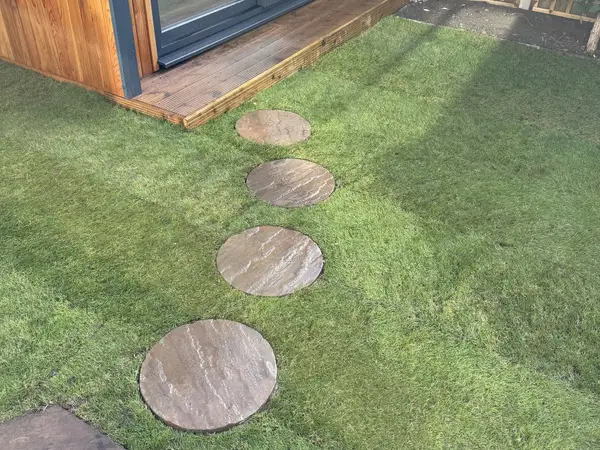
Well-positioned lighting can make steps safer and add atmosphere after dark. Stepping stones or a simple path can lead the eye through the space and help different garden areas feel connected.
Outdoor electrical work should be specified and installed by someone appropriately competent.
7. Keep the palette simple
Repeat a small number of paving, timber and planting colours rather than using many different finishes. A consistent material palette helps a narrow garden feel considered rather than cluttered.
A professional landscaping plan should also cover drainage, levels, access and ongoing maintenance, not just the finished appearance.
- PavingOne paving colour
- TimberOne timber finish
- PlantingA few colours, repeated
Repeating a few finishes makes a narrow garden feel calm, not cluttered.
Common questions
Can a very small garden have both a patio and planting?
Yes. A compact seating area alongside slim beds, containers or vertical planting can create a balance between practicality and greenery.
What is the most low-maintenance option?
A thoughtfully sized patio with hardy planting is often easier to care for than several demanding features. Low-maintenance does not mean maintenance-free.
Do I need a complete redesign?
Not always. New paving, improved borders or clearer pathways may make a substantial difference without replacing everything.