
Patio & paving · Ideas, materials & practical advice
Porcelain vs Natural Stone Patios: Which Is Best?
Compare appearance, upkeep, installation and suitability before choosing paving for your London garden.
2 min readby Paolo Gagnier
Choose porcelain if you prefer a consistent contemporary finish and generally lower water absorption. Choose natural stone if you prefer organic variations and a softer, traditional feel. In either case, the correct sub-base, drainage, paving specification and professional installation matter as much as the material.
What is porcelain paving?
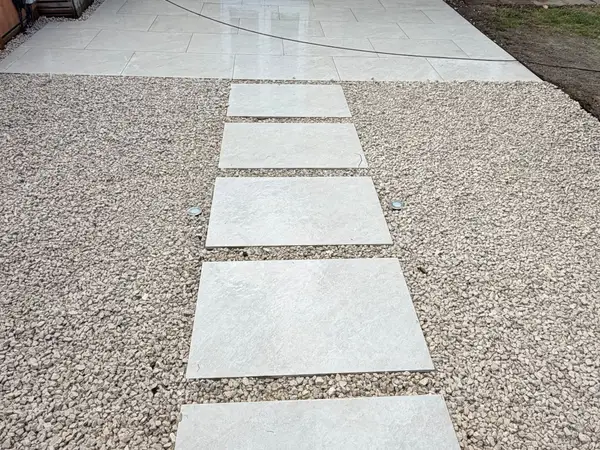
Exterior porcelain paving is manufactured to create a hard, dense surface available in a wide range of colours and textures. It is often chosen for clean lines, large-format slabs and a contemporary appearance.
Porcelain typically absorbs very little water and resists many common stains, but it still needs cleaning and appropriate care. Always choose paving specified for outdoor use with suitable slip resistance.
What is natural stone paving?
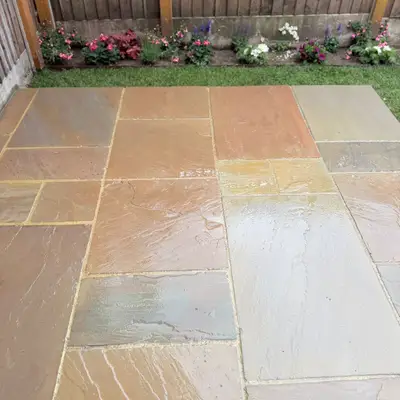
Natural stone includes materials such as sandstone and limestone. Differences in colour, grain and texture give each slab its individual character.
Natural stone can work beautifully with brick walls, planting, timber and more traditional London properties. Some stone types and finishes are more porous or delicate than others, so cleaning and sealing advice should be material-specific.
Porcelain
- The look
- Clean lines and large, even slabs
- Water
- Absorbs very little water
- Cleaning
- Usually simpler to keep clean
- Works best with
- Minimalist designs, interiors in similar tones
Natural stone
- The look
- Every slab different in colour, grain and texture
- Water
- Some types are more porous
- Cleaning
- May need its own cleaner or a sealer
- Works best with
- Brick walls, planting, timber, traditional homes
Which looks better in a small garden?
Porcelain often suits a minimalist design, especially where the interior and exterior have similar tones. Natural stone is ideal where the aim is a softer or cottage-inspired atmosphere.
A small garden can work with either option. Slab proportions, joint colour, planting and the way the patio meets doors and boundaries usually have a greater impact than following a trend.
What about maintenance?
Both patio types benefit from sweeping, removal of leaves and careful cleaning. Porcelain is usually simpler to maintain thanks to its dense surface.
Natural stone may require particular cleaning products or suitable sealers, depending on its type. Avoid using harsh products before checking the manufacturer or supplier guidance.
Does one last longer?
A well-installed patio in either material can provide years of use. Performance depends on the paving product, ground conditions, drainage, bedding system and jointing, as well as how the area is maintained.
Incorrect installation can undermine even premium paving. Ask your installer how they plan to manage levels, water runoff, edges and any steps.
- PavingMade for outdoor use, with suitable slip resistance
- JointingFills the gaps between the slabs
- BeddingThe bed the slabs are laid on
- Sub-baseA firm foundation underneath
- Ground and drainageLevels that let water run away
Get these right and either material gives years of use.
How should you decide?
Start with your preferred style, how you intend to use the space, the amount of maintenance you are comfortable with and the available budget. Compare real samples outdoors in daylight; catalogue images alone can be misleading.
Ask for a written scope describing materials, preparation and finishing details, not simply a price per square metre.
- StyleWhich look do you love?
- UseHow will you use the space?
- UpkeepHow much maintenance suits you?
- BudgetWhat would you like to spend?
Common questions
Is porcelain paving slippery when wet?
Slip resistance varies by product and finish. Choose exterior-rated paving with suitable tested performance and maintain the surface properly.
Is natural stone cheaper than porcelain?
There is no universal winner. Product grade, slab size, ground preparation, access and installation details all affect the overall quotation.
Can porcelain and natural stone be used together?
Yes. A designer or landscaper can combine materials carefully, although consistent levels and a restrained palette usually look best.