
Lawns
Turfing and new lawns in South West London
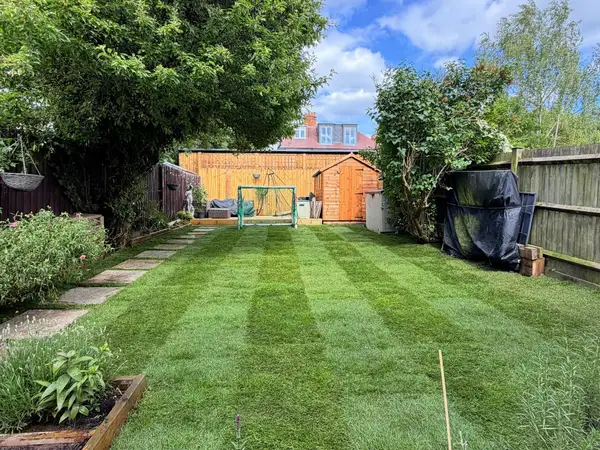
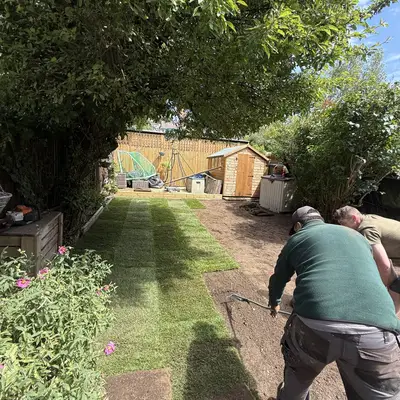
We lay new lawns across South and South West London, from small walled gardens to long family lawns. The old grass is lifted, the ground prepared and levelled, and fresh turf laid tight and watered in. Call, WhatsApp or send the form for a free visit and quote.
9.78/10on Checkatrade, from 142 reviews
What’s included
-
Old lawn lifted
Old grass, weeds, stones and roots cleared out and taken away.
-
Ground prepared
Rotavated, levelled, topsoiled and rolled firm, so the new lawn sits flat and drains well.
-
Turf laid tight
Rolls laid in staggered rows with tight joints and neat edges.
-
Aftercare advice
Clear advice on watering and the first cut, so the lawn roots well.
How we install a new turf lawn
-
Removal of the existing lawn
The top layer of the old lawn is lifted, bagged and taken away.
Benefit: A clean start, free of old grass, thatch and organic material.
-
Removal of weeds, stones and debris
Weeds, stones, roots and debris are cleared from the area.
Benefit: Weeds are less likely to return, and nothing is left to block roots or cause bumps.
-
Rotavating the soil
The soil is rotavated to loosen and turn it over.
Benefit: It breaks up compacted ground, improves drainage and lets the new roots go deeper.
-
Secondary ground clearance
Stones, roots and debris brought up by rotavating are removed.
Benefit: A finer soil base, so uneven patches don’t appear once the turf settles.
-
Levelling and raking
The ground is levelled and raked, taking off high spots and filling hollows.
Benefit: A smooth, even lawn with no dips where water can collect.
-
Installation of fresh topsoil
Good-quality topsoil is spread and levelled across the area.
Benefit: A nutrient-rich bed that helps the new roots establish.
-
Firming the ground
A lawn roller gently firms the prepared soil.
Benefit: Fewer air pockets and less settling, so the lawn doesn’t turn soft, bumpy or uneven.
-
Application of fertiliser
A pre-turf fertiliser is spread evenly before the turf goes down.
Benefit: It feeds the roots so the turf establishes faster.
-
Laying the fresh turf
Turf is laid in staggered rows, like brickwork, with tight joints and no gaps or overlaps.
Benefit: A stronger, even lawn without visible seams. Once established, regular mowing in one direction gives the classic stripes.
-
Initial deep watering
The turf is soaked straight after laying, right through to the soil beneath.
Benefit: It stops the turf drying out or shrinking, and gets the roots growing down.
-
Daily watering during establishment
Water every day for at least the first two weeks, and more in hot or dry weather. Keep it moist, but not waterlogged.
Benefit: The roots bind evenly with the soil, with no dry, brown or lifting patches.
-
The first cut
Wait about two weeks, until the turf has rooted and can’t be lifted. Then mow with a sharp blade on a high setting, taking off no more than a third of the height.
Benefit: The mower won’t lift the turf, and a light first cut gives thick, even growth.
For the best results, keep heavy foot traffic off the lawn for the first two weeks while it establishes.
For a new lawn as part of a full makeover, see garden landscaping. Once it has rooted, our lawn care visits and our healthy lawn care guide will help keep it thick and green.
New lawns across South West London
We have laid lawns in walled gardens in Putney, long gardens in Balham and split-level gardens in Clapham. In Earlsfield we lifted old paving first and turned the space back into lawn.
If a real lawn struggles in your garden because of deep shade or heavy use, artificial grass may suit you better. We are happy to talk through both.
From first visit to finished job
-
Free visit
We measure the lawn, check the soil and levels, and talk through what you want.
-
Clear quote
You get an itemised quote covering preparation, turf and the tidy-up.
-
Preparation
Old lawn lifted, ground dug over, levelled and raked firm.
-
Laying and aftercare
Turf laid and watered in, with clear advice on watering and the first cut.
Recent projects
Real gardens we have worked on, with before and after photos.
-
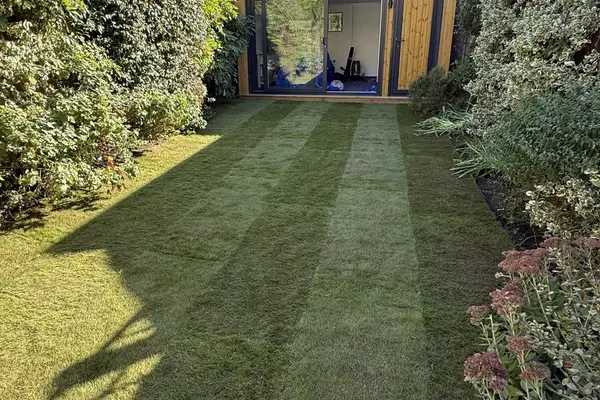
A lawn renewal for a long Southfields garden
A worn, patchy lawn in a long Southfields terraced garden replaced with a fresh striped lawn leading down to the garden office. -
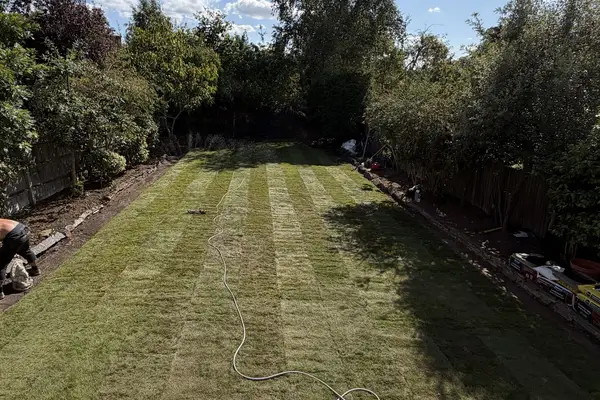
A new lawn for a long Balham garden
An old lawn in a long Balham garden stripped back to the soil and relaid as a fresh striped lawn running down from the stone steps. -
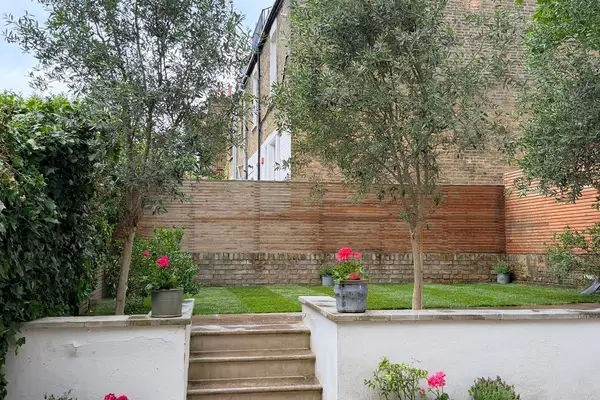
A new upper lawn in a split-level Clapham garden
A fresh striped lawn on the upper level of a split-level Clapham garden, reached by stone steps between planted raised beds. -
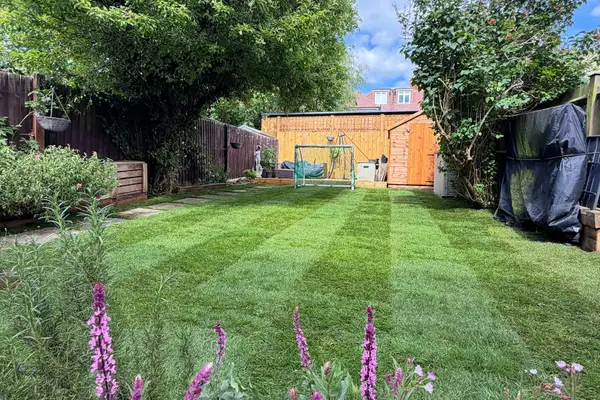
A fresh lawn for an Earlsfield family garden
A worn, weedy Earlsfield lawn replaced with a fresh striped lawn, laid in staggered rows and framed by purple salvias. -
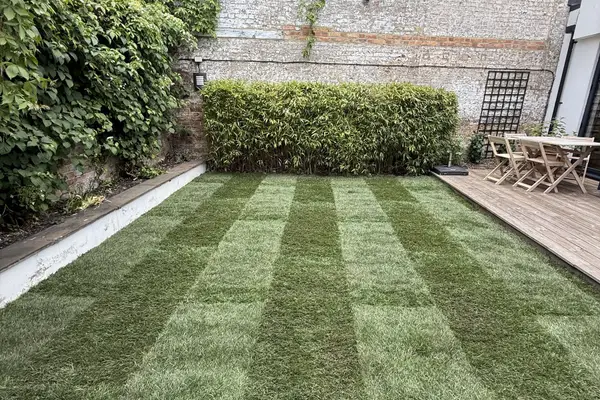
A striped lawn for a walled Putney garden
A dry, weedy lawn in a walled Putney garden rotavated and replaced with a fresh striped lawn beside the timber deck. -
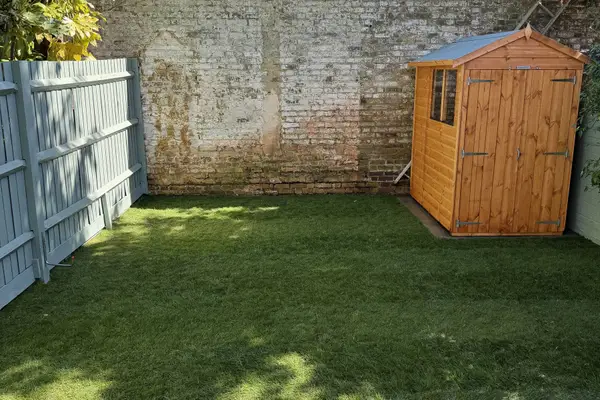
A green lawn for a walled Earlsfield garden
Old broken slabs lifted from a walled Earlsfield garden and replaced with a fresh green lawn beside the timber shed. -
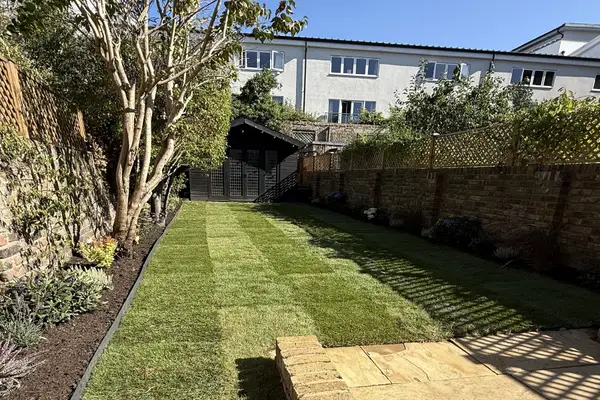
A narrow garden lawn in Clapham
A fresh striped lawn for a narrow Clapham garden, sitting beside a raised sandstone terrace and a freshly planted border. -
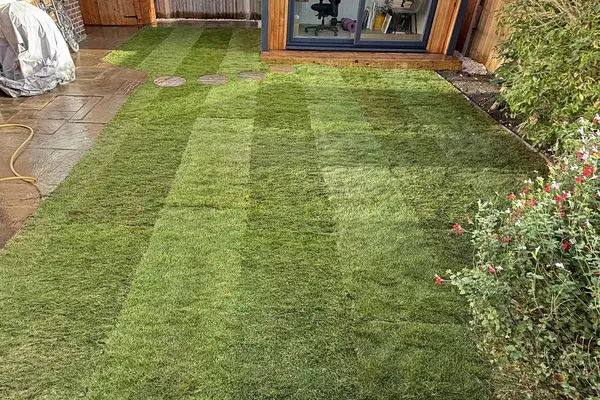
A lawn and stepping stones to an Earlsfield garden office
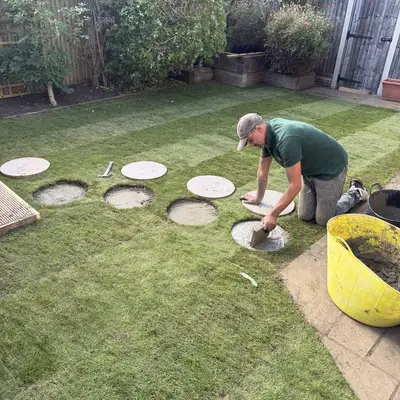
A patchy Earlsfield lawn replaced with a fresh striped lawn and circular stepping stones that lead to the cedar garden office.
What customers say
“Incredible service from start to finish. I cannot recommend Paolo and the team highly enough.”
Questions on turfing
Can’t see your question? Read our general questions or ask us directly.
How soon can I walk on new turf?
Keep heavy foot traffic off it for the first two weeks while the roots take hold. A gentle lift at a corner tells you: if the turf stays put, it has rooted.
How often should I water a newly laid lawn?
Soak it straight after laying, then water it every day for at least the first two weeks, and more often in hot or dry weather. Keep the turf and soil moist, but not waterlogged.
When is the best time of year to lay turf?
Spring and autumn are easiest, because the ground is moist and the weather mild. Turf can be laid for much of the year, but it needs more watering in summer and should not go down on frozen or waterlogged ground.
When should a new lawn have its first cut?
Usually after about two weeks, once the turf has rooted and can’t be lifted at a corner. Use a sharp blade on a high setting and take off no more than a third of the grass height.