
Lawn care · Ideas, materials & practical advice
How to Keep Your Lawn Green and Healthy
A practical, season-by-season lawn care guide for gardens in South West London.
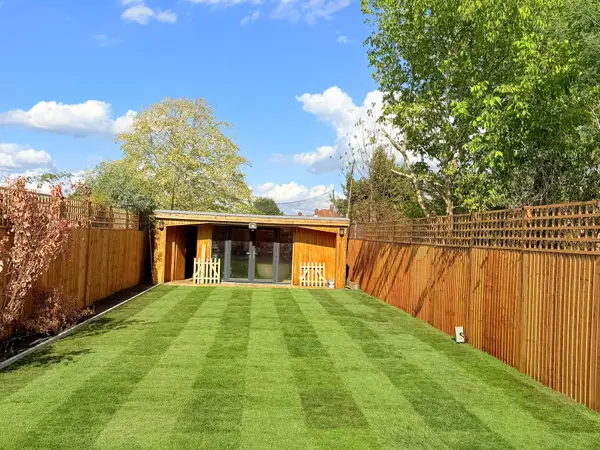
2 min readby Paolo Gagnier
A healthy lawn needs appropriate mowing, sensible watering, enough light and good soil conditions. Avoid cutting too short, tackle compaction and bare patches when conditions are suitable, and give newly laid turf extra attention while it establishes.
Mow little and often during active growth
During spring and summer, regular mowing helps a lawn look neat. Frequency depends on growth, weather and the desired finish; weekly mowing is common during vigorous growth.
Avoid removing too much grass in one cut. Leaving grass a little longer during hot or dry periods can reduce stress.
- Little and oftenWeekly is common while the grass is growing fast.
- Not too shortNever take too much off in one cut.
- Longer when it’s hotA little extra height eases stress in dry spells.
Water according to conditions
Established grass can tolerate some periods of dryness, although it may turn brown and then recover when rain returns. Where watering is needed and permitted, thorough watering less often is generally more useful than repeatedly wetting the surface.
New turf is different: during establishment, the turf and underlying soil need reliable moisture so roots can grow into the ground. Follow turf supplier guidance and any local water restrictions.
Established lawn
- How to water
- Thoroughly, and less often
- In dry weather
- May turn brown, then recover when rain returns
- Follow
- Any local water restrictions
New turf
- How to water
- Reliable moisture while it settles in
- In dry weather
- Turf and soil need moisture so the roots can grow down
- Follow
- The turf supplier’s advice and local restrictions
Improve the soil, not just the appearance
Thin grass, standing water or persistent moss can indicate shade, poor drainage or compacted ground. Aeration may help relieve compaction and improve movement of air and water into the soil.
Where drainage is a recurring issue, fixing the underlying cause is more effective than repeatedly reseeding the same damaged areas.
- Thin grass
- Standing water
- Moss that keeps coming back
- Shade
- Poor drainage
- Compacted ground
Fix the cause first. Aeration can relieve compacted ground.
Deal with bare patches and weeds
Bare patches can be repaired by preparing the soil and reseeding at an appropriate time, commonly spring or early autumn. Keep the repaired area protected while new grass establishes.
A healthy, reasonably dense lawn leaves fewer gaps for unwanted plants. Identify why weeds or moss are thriving before reaching for treatments.
Know when new turf makes sense
Where a lawn is very uneven, badly worn or dominated by weeds, new turf may offer a more immediate fresh start. Successful turfing still depends on correct ground preparation, levels and aftercare.
Turf is not a shortcut around deep shade, poor drainage or unsuitable soil. Those conditions should be addressed first.
Plan care around the seasons
Spring: assess winter damage, resume mowing as growth returns and repair minor patches. Summer: avoid scalping and manage drought stress. Autumn: consider aeration, repairs and overseeding when conditions allow. Winter: minimise heavy wear when the ground is waterlogged or frozen.
- Spring Check for winter damage, start mowing as growth returns, repair small patches.
- Summer Don’t scalp the lawn, and help it through dry spells.
- Autumn Aerate, repair and overseed when conditions allow.
- Winter Keep heavy wear off waterlogged or frozen ground.
Common questions
How often should I mow my lawn in London?
Usually around once a week during strong spring and summer growth, but adapt the schedule to weather and actual growth.
When is the best time to lay turf?
Turf can be laid at various times when the ground is workable and watering is possible. Mild conditions are often easier for establishment than extremes of heat or frost.
Why does my lawn keep developing moss?
Moss often thrives where grass struggles, such as shaded, damp or compacted areas. Improving those conditions is central to longer-term control.