
Landscaping
Patios and paving in South West London
We lay porcelain and natural stone patios, paths and steps across South and South West London, from narrow side returns to large family terraces. Every patio goes on a properly prepared base and is set to fall away from the house, so rain drains off. Call, WhatsApp or send the form for a free visit and quote.
9.78/10on Checkatrade, from 142 reviews
What’s included
-
Porcelain or stone
Pale and dark porcelain, sandstone and other natural stone, chosen to suit your garden.
-
A proper base
Ground dug out and a compacted sub-base laid, so the slabs stay level and firm.
-
Levels and drainage
A gentle fall away from the house, so water runs off instead of pooling.
-
Old paving removed
Old slabs, soil and rubble lifted and taken away as part of the job.
How we lay a patio
A patio is only as good as what sits underneath it. We dig out to the right depth, lay and compact a sub-base, then bed each slab and set the whole patio to a gentle fall, so water runs away from the house and into the garden or a drain. Joints are filled and the edges finished neatly against lawns, beds and walls.
Porcelain is hard-wearing and easy to clean; natural stone such as Indian sandstone has a softer, warmer look. Our guide to porcelain vs natural stone patios compares the two, and we are happy to talk through both at your free visit.
- Lifting old paving, turf and soil, and taking it away
- Digging out, levelling and a compacted sub-base
- Slabs bedded level, with a fall for drainage
- Joints filled and edges finished neatly
- Steps, paths and stepping stones to match
Patios we have laid
From a two-tone chequerboard courtyard in Putney to the circular sandstone patio in our West Norwood cottage garden, every patio is planned around the space it sits in. A narrow side return, a large family terrace and a small courtyard all need a different layout.
Many of our patios are part of a wider garden landscaping job, with new lawns, steps and raised beds built at the same time, as in the modern Earlsfield back garden.
From first visit to finished job
-
Free visit
We measure up, check the levels and drainage, and talk through materials with you.
-
Clear quote
You get an itemised quote covering preparation, the base, the paving and the tidy-up.
-
Groundwork
Old surfaces lifted, ground dug out and a firm sub-base laid and compacted.
-
Paving and finish
Slabs laid and jointed, edges finished, and all the waste taken away.
Recent projects
Real gardens we have worked on, with before and after photos.
-
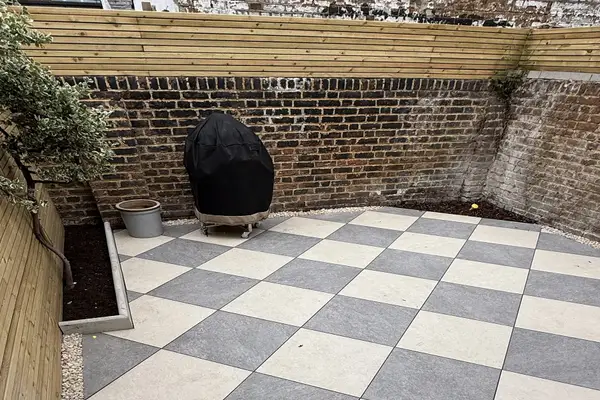
A chequerboard courtyard in Putney
A Putney courtyard paved in a striking chequerboard of light and dark porcelain. -
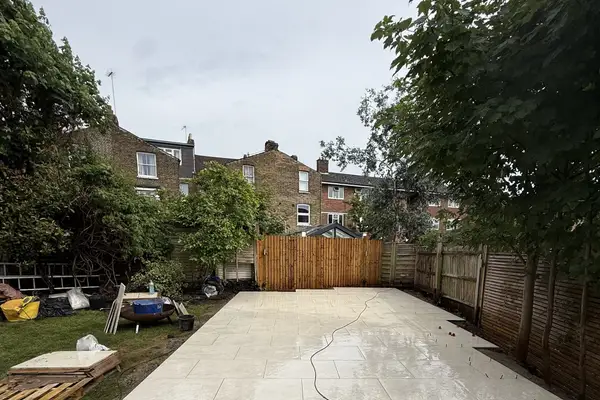
A modern back garden in Earlsfield
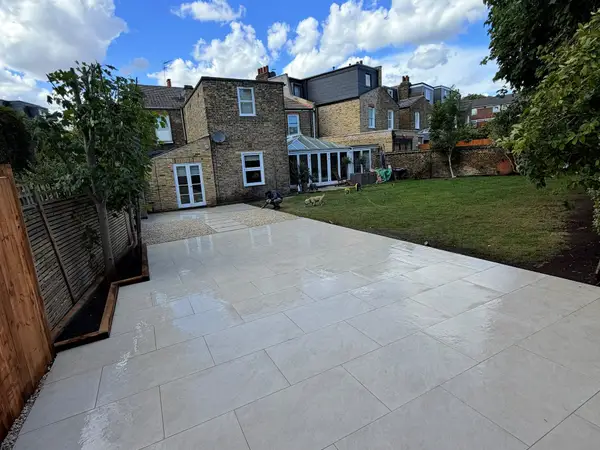
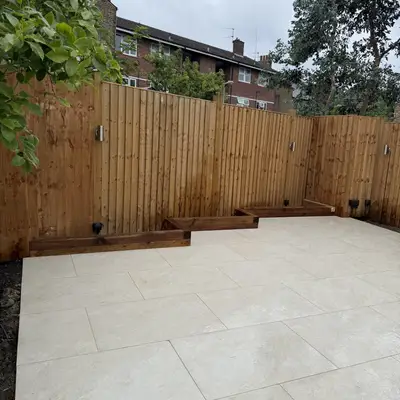
A spacious porcelain patio in large-format, light-coloured slabs, giving an Earlsfield garden a bright, low-maintenance space for dining and relaxing. -
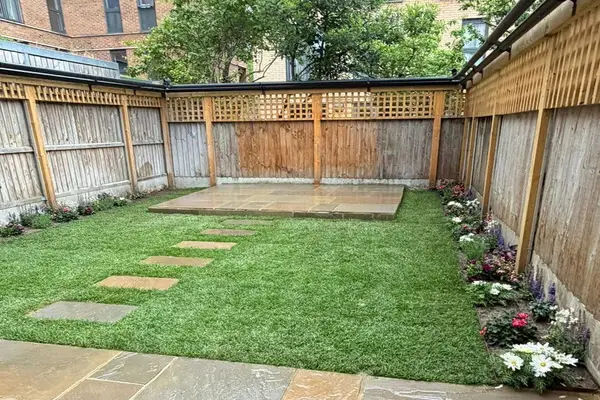
A natural stone garden in Brixton
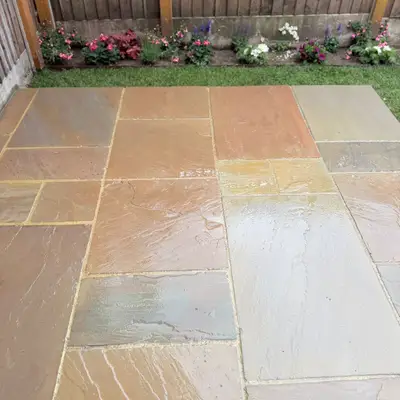
A cluttered Brixton garden turned into a charming, low-maintenance space with a natural stone patio, new lawn, stepping stones and colourful borders.
What customers say
“Paolo and Marco were amazing. They transformed my garden in such little time and made sure they protected my house during construction”
Questions on patios and paving
Can’t see your question? Read our general questions or ask us directly.
Should I choose porcelain or natural stone for my patio?
Both work well. Porcelain is consistent in colour, resists stains and is easy to keep clean; natural stone has more variation in colour and texture and suits a softer, traditional look. We talk through both at the quote visit.
Can you lay a new patio over my old paving?
We usually lift the old paving first, so we can check the ground and lay a proper base. Laying over old slabs raises the level, which can cause problems at doorways and with drainage. The old paving is taken away as part of the job.
How do you stop water pooling on a patio?
We set every patio to a gentle fall away from the house, so rain runs off into the garden, a border or a drain. Where there is nowhere for the water to go, we include drainage in the quote.
Can a patio be laid in a narrow side return?
Yes. Side returns are common in South West London homes. Light-coloured porcelain or a pattern such as a chequerboard can make a narrow space feel wider and brighter, as in our Putney courtyard.